
Burst & Frozen Pipes
Burst Pipe & Freeze Repair in Dallas–Fort Worth
Water coming through the ceiling is no time for a long read. Shut the main off first. Then get the split pipe replaced and the rest of the system checked.
- Price before work starts
- Your approval before anything begins
- Tested before we leave
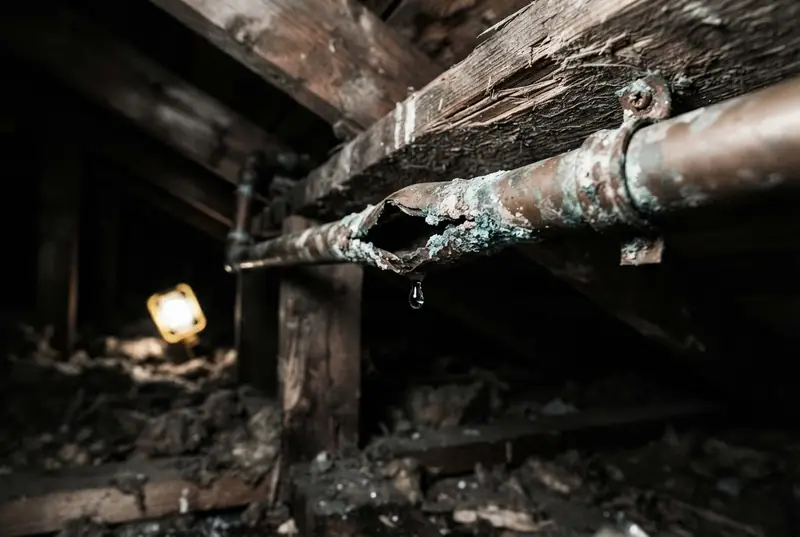
Burst & Frozen Pipes: what you're dealing with
First things first. Shut the water off at the main: either the valve where the line enters the house or the shut-off at the meter box near the street. Open a couple of faucets to drain the lines. If water is near anything electrical, stay out of it, and switch off that circuit only if you can reach the panel on dry ground. While the water is off, turn the water heater off too, or set a gas unit to pilot.
Pipes burst for a handful of reasons. In a freeze, ice blocks the line and pressure builds behind it until the pipe splits. The leak shows up when things thaw. The rest of the year it's a worn supply line, a corroded fitting or water pressure that runs too high. The repair itself is simple: cut out the damage and put in new pipe. The part that matters is finding every split, because a freeze almost never breaks a pipe in just one place.
Signs a pipe has burst or frozen
- Water spraying, pouring or dripping through a ceiling or wall
- No water, or only a trickle, at a faucet during a freeze
- Water pressure drops through the whole house all at once
- A hissing or rushing sound inside a wall or up in the attic
- Frost or a bulge on an exposed pipe, hose bib or attic line
The job
How the work runs
Stop the water
The main is shut off and the split line isolated so the damage stops spreading.
Find every break
Attic runs, outside walls and hose bibs all get checked. One visible split usually has company.
Price it, then repair it
You get the price before any cutting starts. Damaged pipe comes out and new pipe goes in.
Pressure-test the system
The water comes back on in stages and the whole system is tested under pressure before we leave.
North Texas
Why it happens here
North Texas builds for heat, not cold. Water lines run through attics and outside walls with thin insulation, and hose bibs sit exposed on the brick. Most winters that is fine. Then a hard freeze like February 2021 arrives, and pipes split across the whole region in a single week. Before the next one: insulate the attic lines, disconnect the hoses, cover the hose bibs, and make sure everyone in the house knows where the main shut-off is. A house whose pipes have split more than once is a candidate for a repipe.
Straight answers
Burst & Frozen Pipes: common questions
A pipe is frozen but hasn't burst. What do I do?
Leave the faucet open so melting water has somewhere to go. Warm the frozen section gently with a hair dryer, or with a space heater kept well away from anything that burns. Never use a torch or an open flame. Know where your main shut-off is before the pipe thaws, because a split often doesn't show until the ice lets go.
Which valve kills water to the whole house, and where do I look for it?
There are usually two places to look. The first is at the meter, inside a lidded box sunk into the lawn by the street or the alley; that shut-off may take a meter key. The second is a house valve at the spot where the supply comes in, commonly a front flower bed or the garage, though not every home has one. Track yours down before you need it, and check that it still turns.
Does dripping the faucets really prevent a freeze-up?
It helps. Moving water freezes more slowly, and an open tap relieves the pressure that splits pipe. Drip both hot and cold at the faucets farthest from where the water comes in, open the cabinet doors under sinks on outside walls, and keep the heat on. It won't save an uninsulated attic line in a long hard freeze, which is why insulation comes first.
Service area
Burst & Frozen Pipes across DFW
The same work, in every city on the list.