
Repiping
Whole-Home Repiping in Dallas–Fort Worth
One leak is a repair. Three leaks is a pattern. When the pipe itself is finished, we replace the water lines through the whole house and get them out from under the slab for good.
- Price before work starts
- Your approval before anything begins
- Tested before we leave
Repiping: what you're dealing with
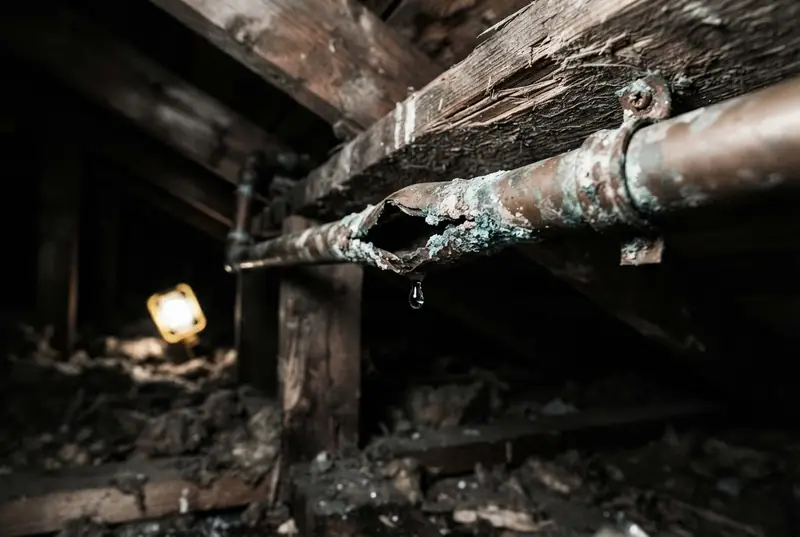
Water pipe wears out, and each kind has its own failure. With galvanized steel it's rust: the inside narrows until a shower is barely a drizzle. Polybutylene is the gray plastic that went into houses in the late 1970s, through the 80s and into the mid-1990s. It goes brittle and cracks at its fittings. Copper buried under a slab gets eaten into pinholes. The first leak is bad luck. The second and third mean the whole system has reached the same age at the same time.
A repipe takes every hot and cold line out of service, from the main shut-off to the last faucet, and replaces it. The new pipe goes overhead: across the attic, down through the walls, out to each fixture. Nothing new goes under the slab. The old pipe stays buried and dead. Done right, that means a few small, planned openings in the drywall, insulation on every attic line and a pressure test before anything gets closed.
Signs it's time to stop patching
- You have paid for a second or third leak repair on the same plumbing
- Every faucet in the house runs weak, hot and cold alike
- The first water out of a tap in the morning runs brown
- Gray plastic where the supply lines show: under sinks, next to the water heater
- A slab leak has come back on a line that was already fixed
The job
How the work runs
Survey the house
What the pipe is, where it runs, how many fixtures it feeds and what shape it is in.
Plan it and price it
Routes are mapped to keep drywall openings few and small. You get the price and the schedule before work begins.
Run the new lines
New pipe goes through the attic and walls and is tied in fixture by fixture. Attic lines are insulated against freezes.
Pressure up, then close up
The new system is tested under pressure, and inspected where the city requires it, before any wall is closed.
North Texas
Why it happens here
Dallas–Fort Worth has more reasons to repipe than most places. A big share of the area's housing went up during the polybutylene years. Older neighborhoods still have galvanized steel in the walls. And slab foundations on moving clay make every leak under the floor hard to reach. Running new lines overhead deals with all three at once. The trade-off is that attic pipe has to be insulated properly, because North Texas does freeze.
Straight answers
Repiping: common questions
Can we live in the house during a repipe?
In most cases, yes. The water is shut off while lines are being cut over and comes back on between work days wherever the job allows. You get the schedule before the job starts, so you can plan around it.
PEX or copper?
It depends on the house and on what local code allows. PEX bends around obstacles, needs fewer fittings and tolerates a freeze better than rigid pipe. You are told which material is recommended for your home, and why, before you agree to anything.
How much of my drywall gets cut?
Less than most people expect. Openings go where lines drop to each fixture and where they change direction. The plan shows every opening, and you know before work starts how each one gets closed.
Service area
Repiping across DFW
The same work, in every city on the list.