
Hydro-Jetting & Drains
Hydro-Jetting & Drain Cleaning in Dallas–Fort Worth
Running a cable gets a drain moving. Jetting gets the pipe clean. We use the one your line needs, then tell you why it clogged.
- Price before work starts
- Your approval before anything begins
- Tested before we leave
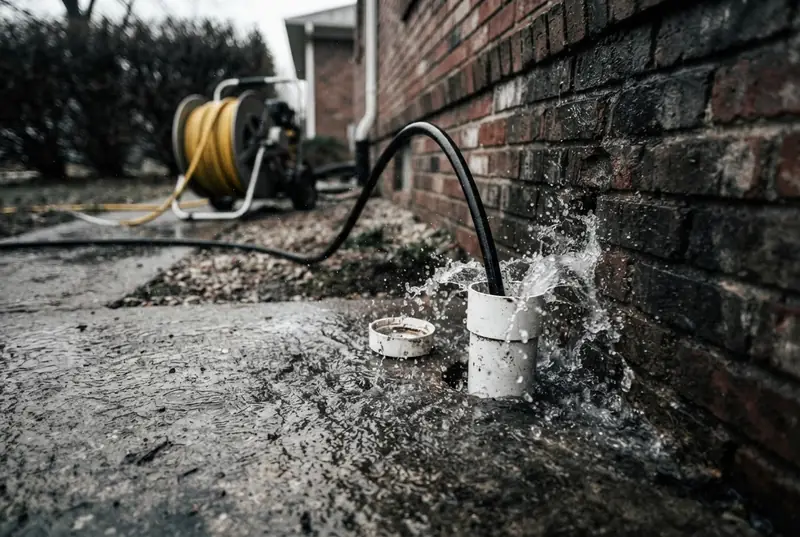
Hydro-Jetting & Drains: what you're dealing with
Most drain clogs are one of four things: grease, scale, roots or something that should never have gone down the drain. A cable machine drills through the blockage and gets water moving. That is the right tool for plenty of clogs. But a cable leaves grease and sludge stuck to the pipe wall, and the line closes up again a few months later.
Hydro-jetting sends water down the line at several thousand psi through a nozzle that scours the full inside of the pipe. It strips grease, flushes out scale and sludge, and cuts roots back to the pipe wall. It also has limits. Jetting won't fix a pipe that is broken or sagging, and badly corroded cast iron needs a camera look before anyone puts that much pressure in it.
When a drain needs more than a plunger
- A drain that was cleared last month is slow again
- Two or three fixtures act up together instead of one
- A flushed toilet sends water bubbling up through the tub or shower drain
- The kitchen sink drains slower every month, even with a clean trap
- A sewer odor hangs around the floor drains or the outdoor cleanout
The job
How the work runs
Ask first
A few questions come before any machine: what backs up, when it started, what has already been tried and when the house was built.
Clear it properly
The line is worked from a cleanout that reaches the whole run, with a cable or a jetter depending on what is in there. The price comes before the work.
Look inside
On main lines and repeat clogs, a camera run after cleaning shows whether the pipe is clear and whether it is damaged.
Explain the clog
You are told what was blocking the pipe and why it built up, and whether the answer is a change of habit, a cleaning schedule or a repair.
North Texas
Why it happens here
Two things make drains harder here. The first is age: homes built before the 1980s mostly drain through cast iron, and its rough, scaled inside catches everything that passes. The second is roots: when the clay dries out in summer, trees send roots toward any moisture they can find, and a seeping sewer joint is an easy target. If an older home has needed its main line cleared more than once in a year, the next step is a camera, not another cleaning.
Straight answers
Hydro-Jetting & Drains: common questions
Is hydro-jetting safe for old pipes?
For sound pipe, yes. For cast iron that is already thin or cracked, it can finish what corrosion started. That is why older lines get a camera inspection first. If the pipe can't take a jetter, cleaning was never going to solve the problem anyway.
Drain cleaner from the hardware store: worth trying first?
Skip it. The chemical usually burns a small channel through the clog and stops, and what it leaves behind is a pipe full of caustic water that somebody has to open. It is also rough on old metal drains. If a bottle already went down, say so before work starts.
What if my house has no cleanout?
Plenty of older homes don't. The line can sometimes be reached by pulling a toilet or going in through a roof vent, but that limits what equipment fits. Put in a proper two-way cleanout close to the house and every cleaning or camera run after that is quicker and more thorough.
Service area
Hydro-Jetting & Drains across DFW
The same work, in every city on the list.